Solid-colour systems
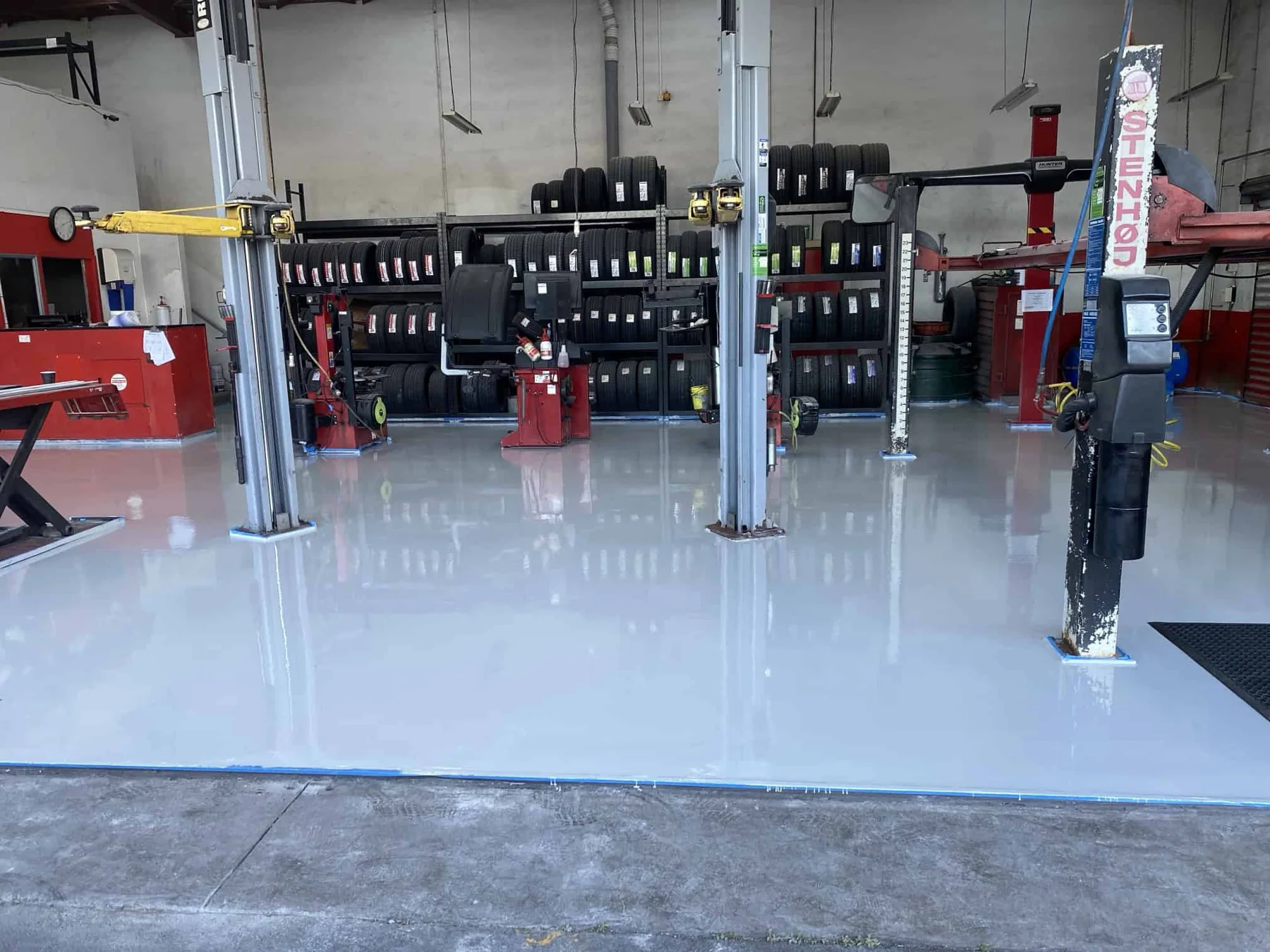
A practical uniform finish in an agreed colour and sheen. Film thickness and layer count are selected for the service conditions; a thin decorative roll coat should not be confused with a higher-build resin system.

Epoxy floor coating systems
Professionally prepared epoxy concrete floor coating systems for Auckland garages, workshops and commercial spaces.
Site-specific concrete flooring
A durable epoxy finish depends on substrate condition, mechanical preparation and a system matched to the way the floor is used. We assess contamination, moisture risk, repairs, traffic and downtime before specifying the work.
Specify the system
A professional epoxy floor combines substrate assessment, mechanical preparation, compatible primers, resin layers and an appropriate finish. Epoxy can produce a seamless, hard-wearing surface for garages, workshops, utility areas, retail back rooms and suitable commercial interiors. The correct build depends on traffic, chemicals, moisture, sunlight, slip requirements and cleaning—not just the preferred colour.
A practical uniform finish in an agreed colour and sheen. Film thickness and layer count are selected for the service conditions; a thin decorative roll coat should not be confused with a higher-build resin system.
Coloured flakes add visual texture and help disguise minor dirt or wear. Broadcast density, flake blend and clear topcoat determine the appearance and cleanability. Samples are useful because large floors read differently from a small chip.
Selected aggregates can add texture where wet or contaminated floors are foreseeable. More texture may improve grip but makes mopping harder. The specification should balance slip risk, footwear, drainage and cleaning.
Preparation controls adhesion
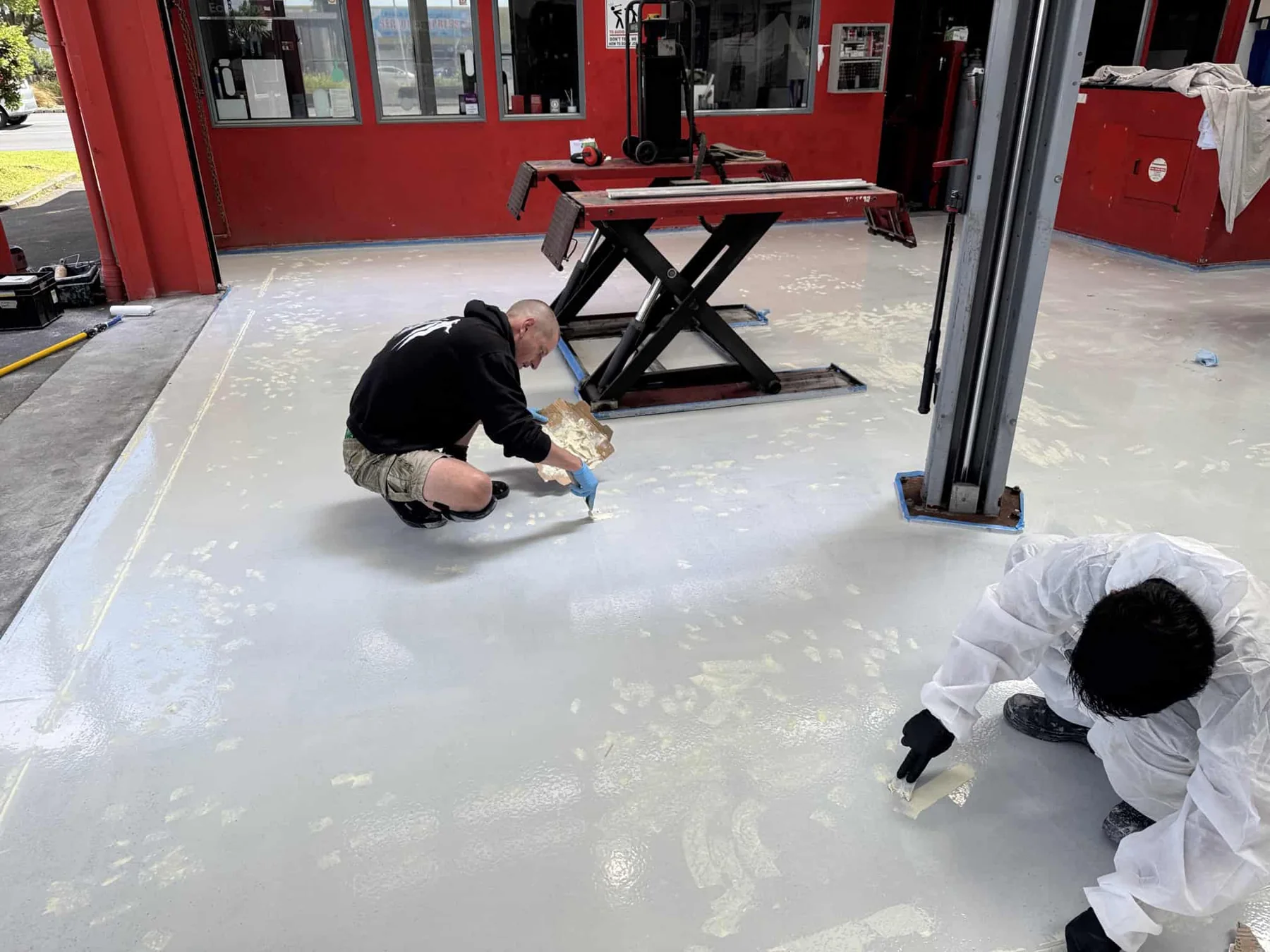
Coatings rely on a sound bond to the slab. We inspect hardness, laitance, cracks, previous coatings, oil, tyre residue, curing compounds, damp indicators and repairs. Diamond grinding removes weak surface material and creates a profile for the specified system while suitable extraction controls dust. Edges and restricted areas are prepared with smaller equipment.
Oil or chemicals that have penetrated concrete can continue to affect adhesion. Active leaks, hydrostatic pressure or excessive slab moisture are not solved by applying epoxy. Cracks and joints also need the right treatment: static defects may be repaired, while moving joints often need to remain functional and visible. We set realistic expectations because coating cannot make a structurally unsound slab new.
Epoxy needs suitable substrate and air temperatures and must cure without moisture, dust or premature traffic. Recoat windows matter to intercoat adhesion. Return-to-service times vary by chemistry and conditions, so pedestrian use, vehicle parking and chemical exposure follow the written handover—not a generic overnight promise.
Standard epoxy can amber or chalk in strong ultraviolet light. A UV-stable compatible topcoat may be recommended near open doors or sunlit areas. Chemical resistance also varies; fuels, acids, solvents, hot tyres and standing liquids can mark or soften the wrong system. Tell us how the floor will be used so these exposures can be specified honestly.
Request an epoxy assessmentLong-term performance
Remove abrasive grit, clean spills promptly and use a neutral cleaner compatible with the topcoat. Avoid aggressive solvents and abrasive pads unless approved. Place trays beneath leak-prone equipment and protect the floor when dragging or welding.
Area, slab condition, coating removal, contamination, repairs, moisture, system thickness, decorative broadcast, slip aggregate, edges, access and downtime determine price. Preparation is often the largest variable, which is why inspection matters.
Concrete variation, repaired cracks and movement joints may remain visible beneath a seamless finish. We agree colour, sheen, texture and scope before work and explain cure protection and first-clean instructions at handover.
Our process
Inspect the slab, use, contamination and existing coatings.
Mechanically prepare the concrete to a clean, sound profile.
Complete agreed crack, joint and surface repairs.
Apply the specified primer and epoxy coating system.
Questions answered
Grinding removes weak or incompatible surface material and creates a clean mechanical profile for reliable coating adhesion.
Only when it is sound and compatible. Failed or poorly bonded material generally needs to be removed first.
Timing varies by system, repairs, temperature and service conditions. Your written quote will state the expected programme.
Yes. A site-specific assessment lets us confirm preparation, repairs, coating system, access and price.
Send your Auckland suburb, approximate area, floor condition and photos for a site-specific assessment.