1. Inspect
Assess slab hardness, damage, contaminants, previous coatings, access and the required finish.

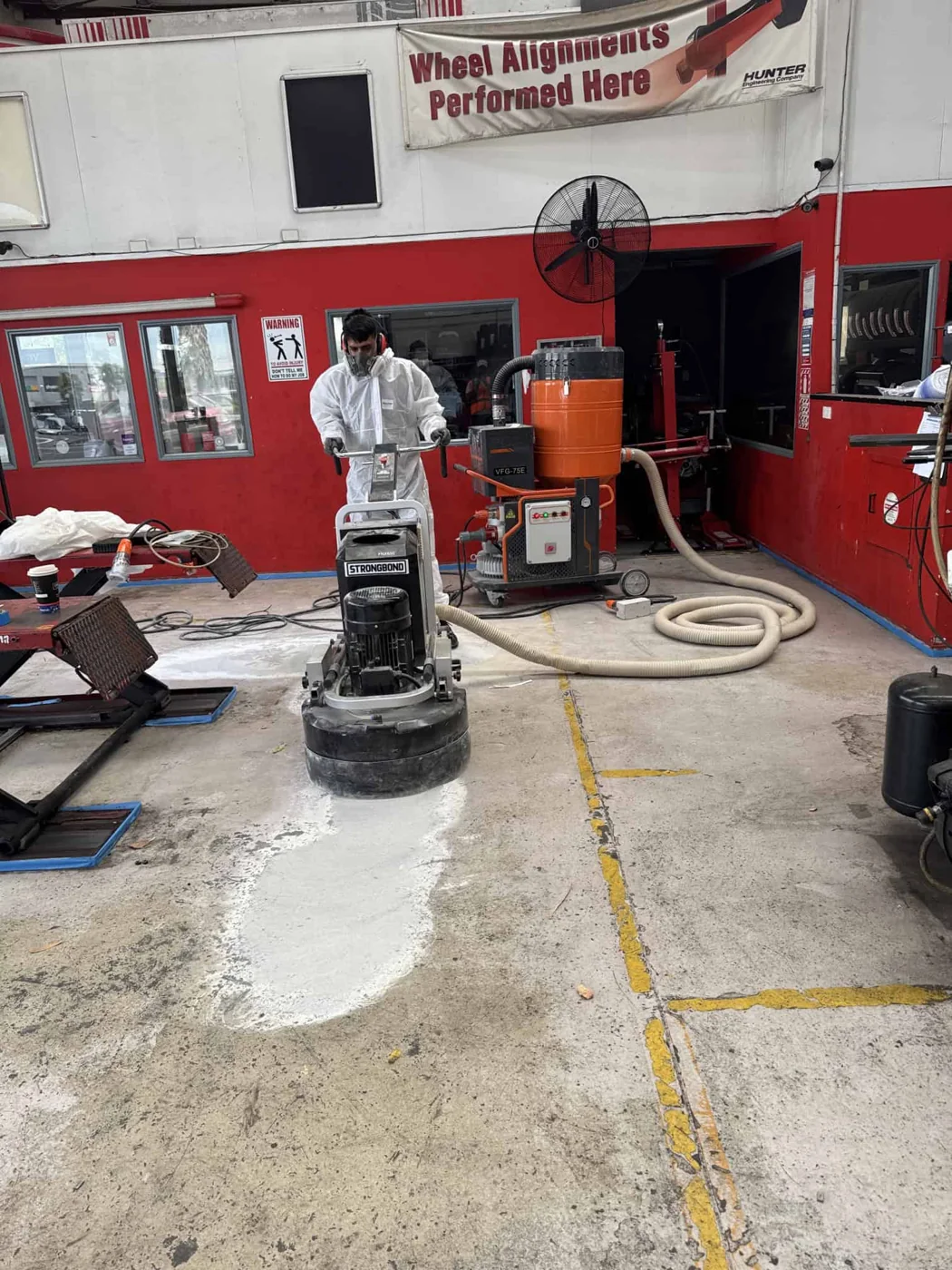
Mechanically refined concrete floors
Mechanical concrete preparation, coating removal, surface refinement, grind-and-seal and polished-concrete assessment for Auckland commercial, industrial and residential floors.
QUICK ANSWER
Concrete grinding mechanically removes weak surface material, compatible coatings, adhesive residue and imperfections, or progressively refines a suitable slab for sealing or polishing. The required tooling and surface profile depend on the existing concrete and the flooring or coating system planned next.
Service information reviewed 15 July 2026. Final suitability, programme and price are confirmed for the individual site.
See concrete preparation in action
Watch the specialist equipment, mechanical preparation and epoxy coating work used on a real FlooringPro concrete-floor project.
Site-specific service
Mechanically polished concrete is created by progressively grinding and refining the slab with diamond tooling, then densifying and polishing it to the agreed exposure and sheen. It is different from a clear topical coating. We assess slab condition, aggregate, repairs, moisture, edges and intended traffic before confirming what finish is achievable.
Our process
Assess slab hardness, damage, contaminants, previous coatings, access and the required finish.
Use staged diamond tooling to flatten and expose the concrete to the agreed level.
Apply a compatible densifier and continue honing to refine and strengthen the surface.
Polish to the selected sheen, detail edges and apply the specified guard before handover.
CHOOSE THE RIGHT CONCRETE PATHWAY
Concrete grinding is preparation, not a single finish. FlooringPro assesses the slab and intended use before confirming whether the floor needs coating preparation, grind and seal, mechanical polishing or repair before another system is installed.
Mechanical grinding can remove laitance, weak surface material, old paint and compatible coating residue while creating a suitable profile for the specified epoxy, polyurethane or resin system.
Old flooring can leave adhesive, levelling compounds and local contamination. Removal requirements are assessed against the condition of the slab and the flooring system planned next.
The surface is ground to the agreed exposure, then protected with a compatible topical sealer or clear-coat system. This differs from mechanically polished concrete.
Diamond tooling progressively refines suitable concrete before densifying and polishing it to the agreed sheen. Not every old or damaged slab can achieve the same aggregate exposure or appearance.
ASSESS BEFORE GRINDING
The written scope is based on what is on and inside the slab, the final floor system and how the space will be used.
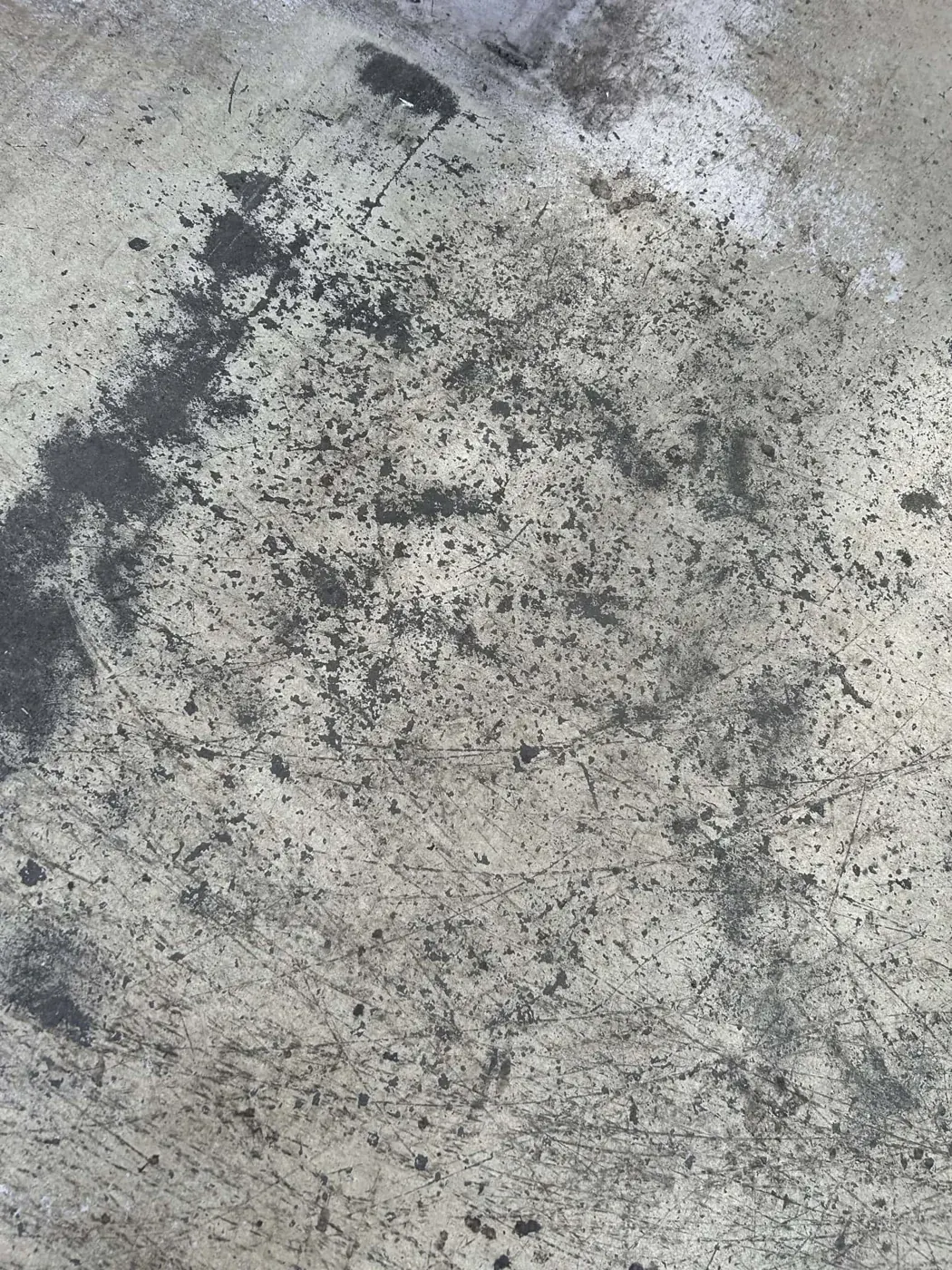
Deep cracks, structural movement, moisture and contamination may require separate investigation or remediation. Grinding alone cannot correct every slab defect.
VERIFIED AUCKLAND PROJECT PROOF
These FlooringPro projects show why the required finish, site programme and slab condition must be understood before grinding begins.
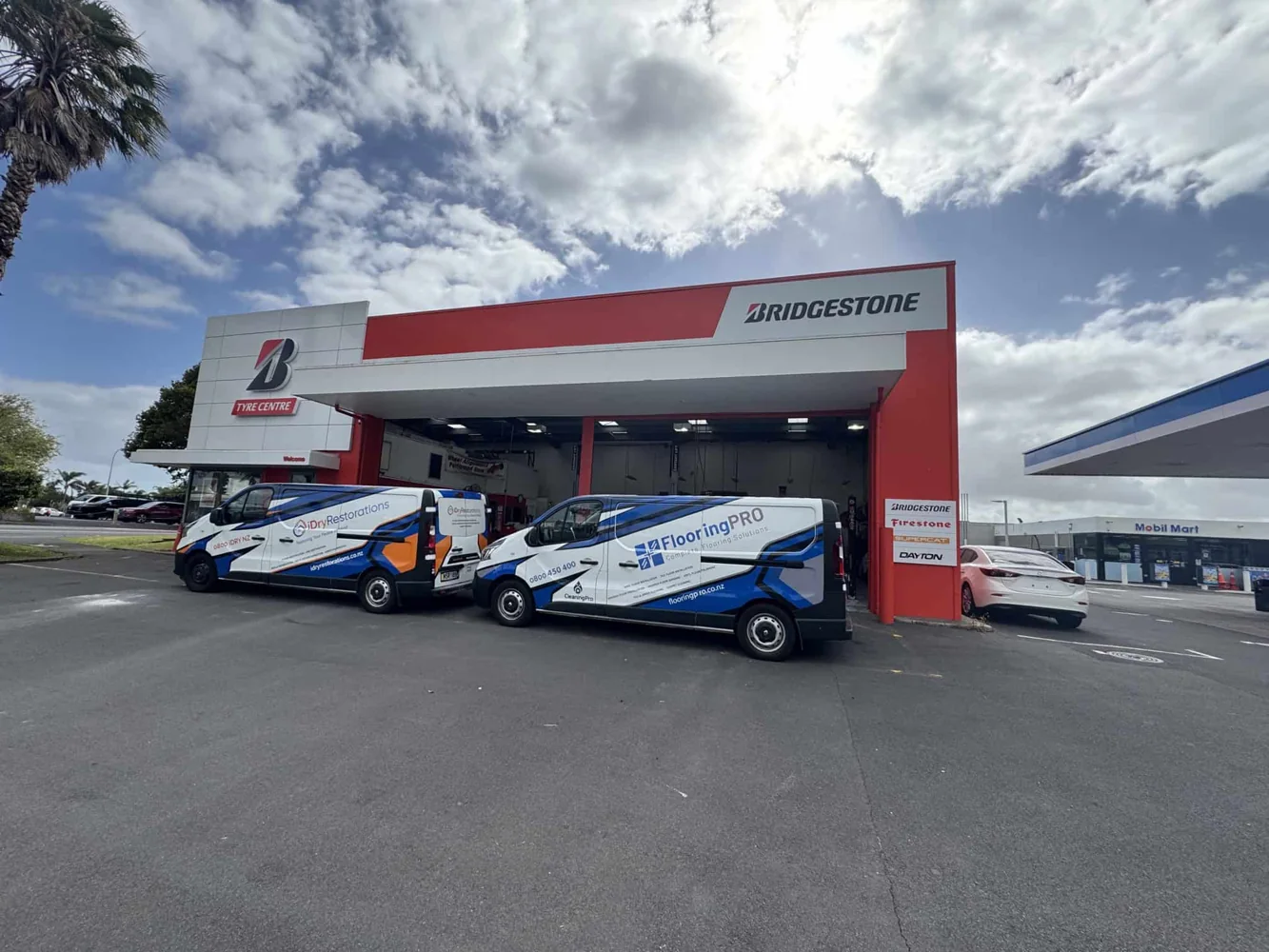
Concrete grinding and MapeFloor System 34 coating work was planned around an Auckland Anniversary long-weekend shutdown. Pinholes found after the first coat were filled and sanded before the final coating.
View Bridgestone case study →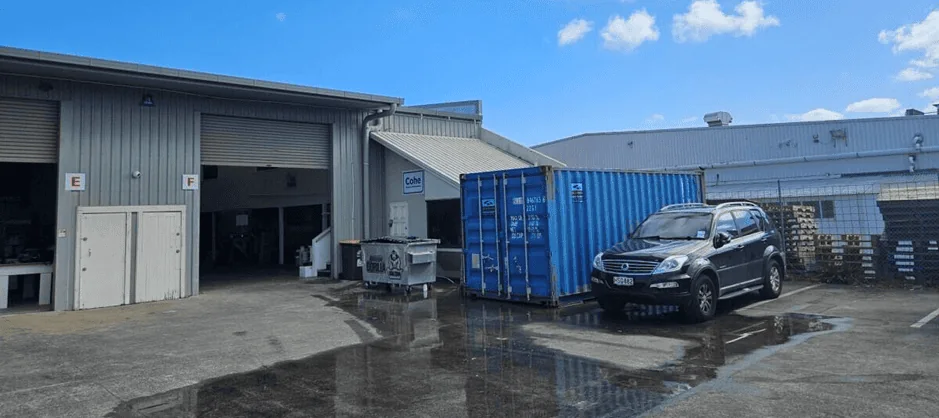
Grinding removed paint spills and prepared a damaged warehouse slab. Cracks were repaired before an epoxy system was installed to improve presentation and support leasing.
View warehouse case study →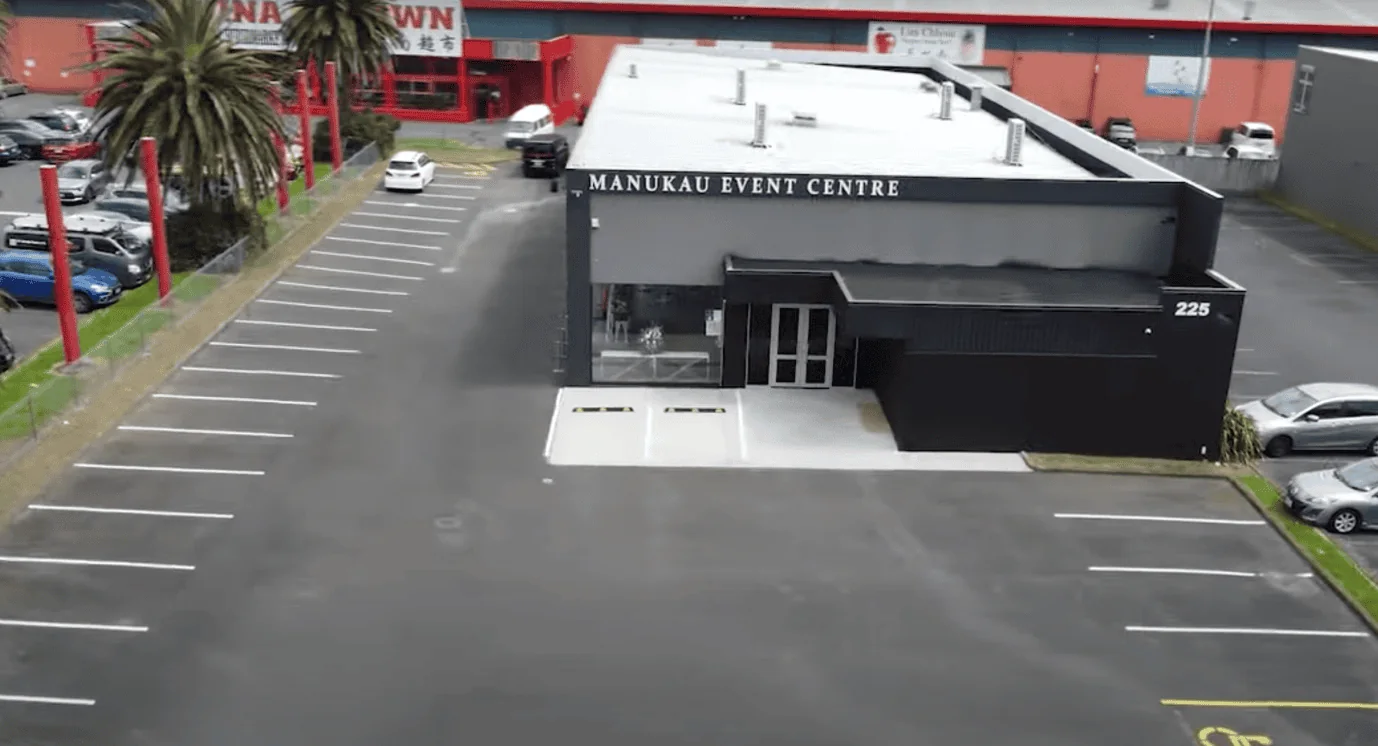
Multiple grinding passes improved a stained event-space slab before sealing and clear coating for a durable, maintainable high-traffic finish.
View event-centre case study →BEFORE, DURING AND FINISHED
Real project images show the existing condition, mechanical preparation and completed floor systems.
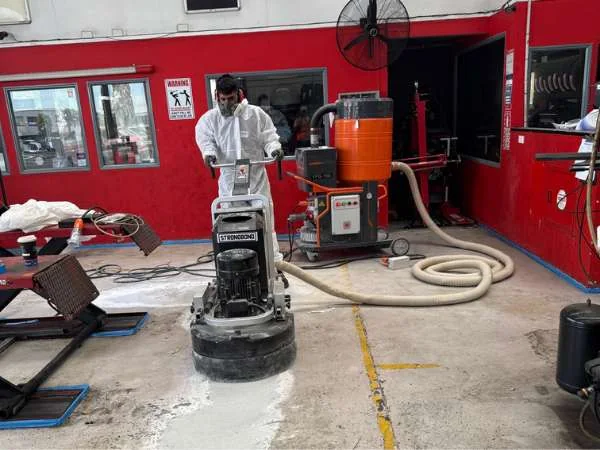
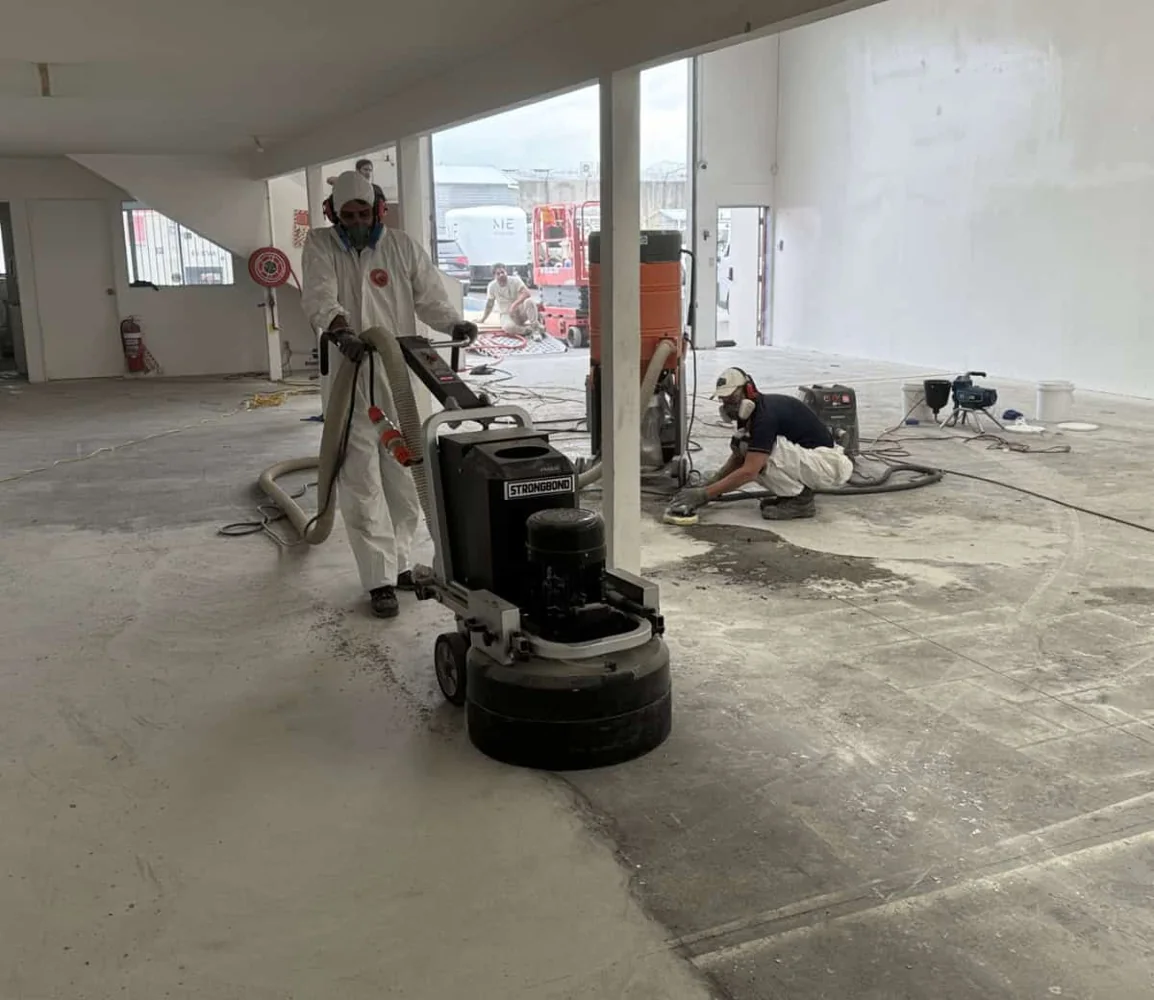
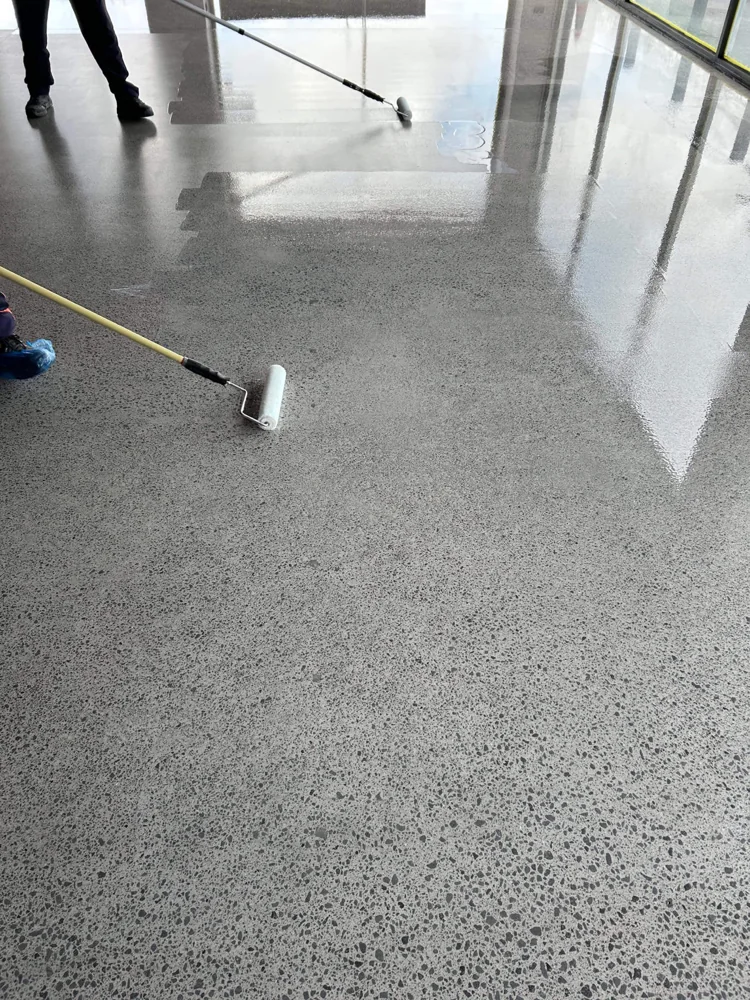
Concrete machinery, extraction, noise, access and programme must be discussed before work. Workshops, warehouses, retail spaces and event venues may require staged work, restricted hours or coordination with other trades.
The assessment should identify movable equipment, fixed machinery, edge access, power, waste handling, curing or coating times and the point at which the floor can return to service. A fast programme must still allow the selected repair, primer, coating or sealer to be installed under suitable conditions.
Professional extraction reduces airborne dust during the main grinding operation, but no process should be presented as completely dust-free. Edges, detailed areas, old coatings and floor condition affect the controls required.
Grinding can reveal aggregate, historic repairs, discolouration and inconsistencies in an existing slab. FlooringPro confirms the intended finish and known limitations in writing rather than promising that every slab will become visually identical.
SPECIALIST PREPARATION, SUPPORTED SYSTEMS
FlooringPro’s advantage is connecting concrete preparation to the flooring or coating installed next. The grinding method, repairs and surface profile are selected with the intended Mapei, Sika or other supported system in mind, subject to product requirements and site conditions.



Questions answered
No. Mechanical polishing refines the concrete through progressively finer diamond stages. Grind and seal uses a topical sealer over prepared concrete, creating a different appearance and maintenance profile.
Not always. Deep contamination, extensive repairs, weak concrete or some previous coatings can limit the result. A site inspection helps establish the achievable exposure and finish.
Slip performance depends on finish, contamination and whether the floor is wet. We discuss the area use and select an appropriate specification; spills still need prompt cleaning.
Timing depends on floor area, slab condition, edge work, required aggregate exposure and polishing stages. Your written quote will set out access and curing requirements.
Depending on the slab and material, grinding may remove laitance, compatible paint or coating residue, adhesive, levelling compound and local surface imperfections. A site test may be required.
No. Professional extraction reduces dust during main grinding, but edges, detailed work, old coatings and floor condition affect the controls required.
Cracks, pinholes, spalling and damaged edges are assessed before the final coating or sealing scope is confirmed. Structural movement or moisture may require separate investigation.
Yes, where appropriate. The required surface profile depends on the epoxy or resin system, slab condition and product specification.
Send your Auckland suburb, approximate area, timing and photos for a site-specific quote.
Request a written quote
Share the site details and FlooringPro will follow up. Prefer to talk? Call 0800 452 102.
What happens next