Inspect the slab
We assess surface strength, old paint, oil contamination, cracks, moisture risk and intended use.

Auckland concrete floor specialists
Mechanical preparation and practical coating systems for home garages, workshops and vehicle spaces.
QUICK ANSWER
A garage-floor coating quote should cover concrete condition, existing paint or contamination, grinding, cracks and pinholes, coating layers, slip and appearance requirements, curing and return-to-use guidance. Final suitability depends on the slab and selected system.
Service information reviewed 15 July 2026. Final suitability, programme and price are confirmed for the individual site.
Built for real use
A lasting result starts below the coating. FlooringPro checks the slab, old coatings, contamination, cracks and moisture risk, then recommends a system for the traffic and finish you need.
A complete scope
We assess surface strength, old paint, oil contamination, cracks, moisture risk and intended use.
Concrete grinding creates the clean, sound profile required by the selected system.
Coating and finish choices are matched to the substrate, traffic and appearance required.
Our process
Confirm condition, access, use and finish.
Grind and complete agreed repairs.
Apply the specified coating system.
Provide cure and return-to-service guidance.
Project-proven finish
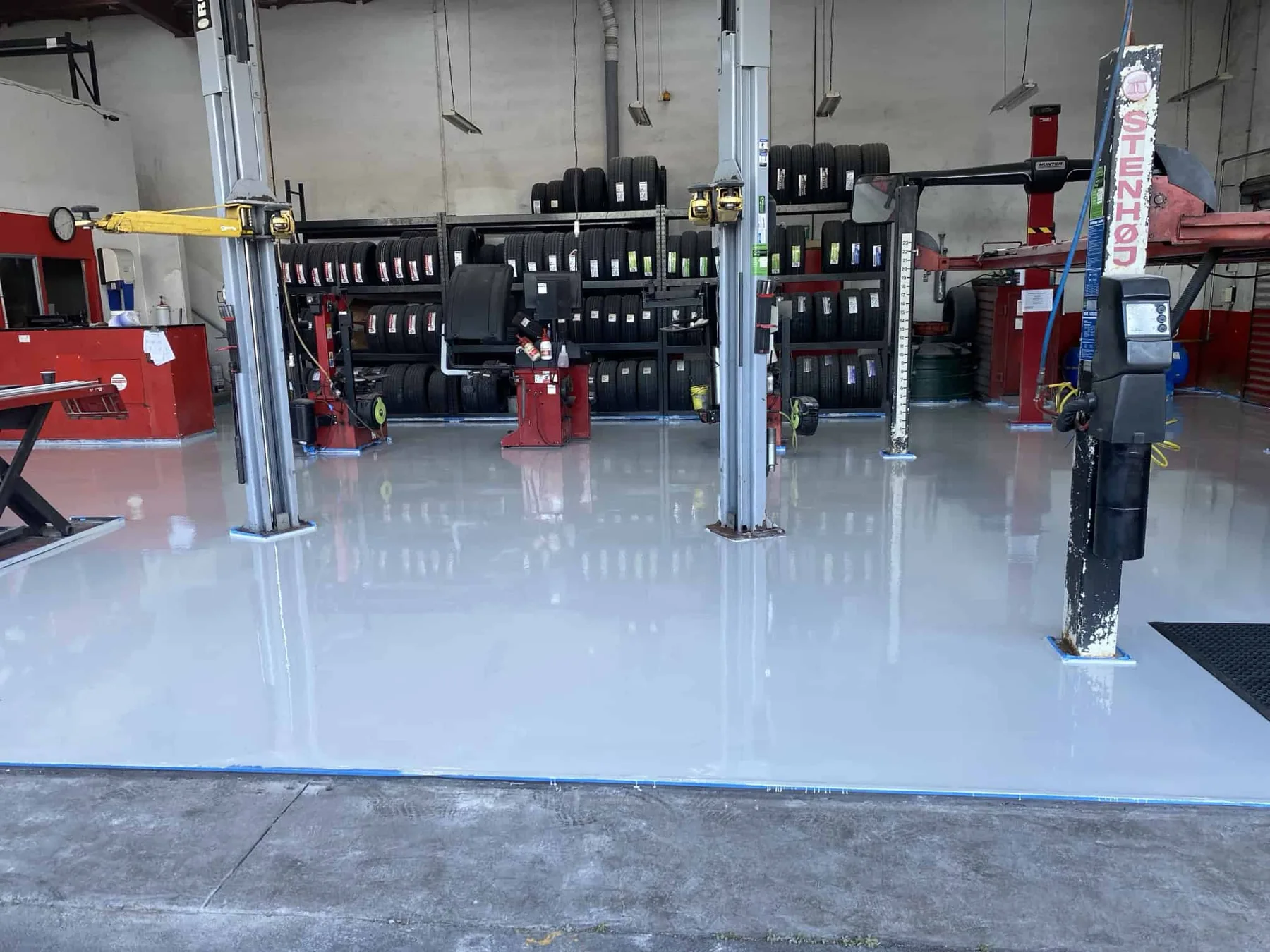
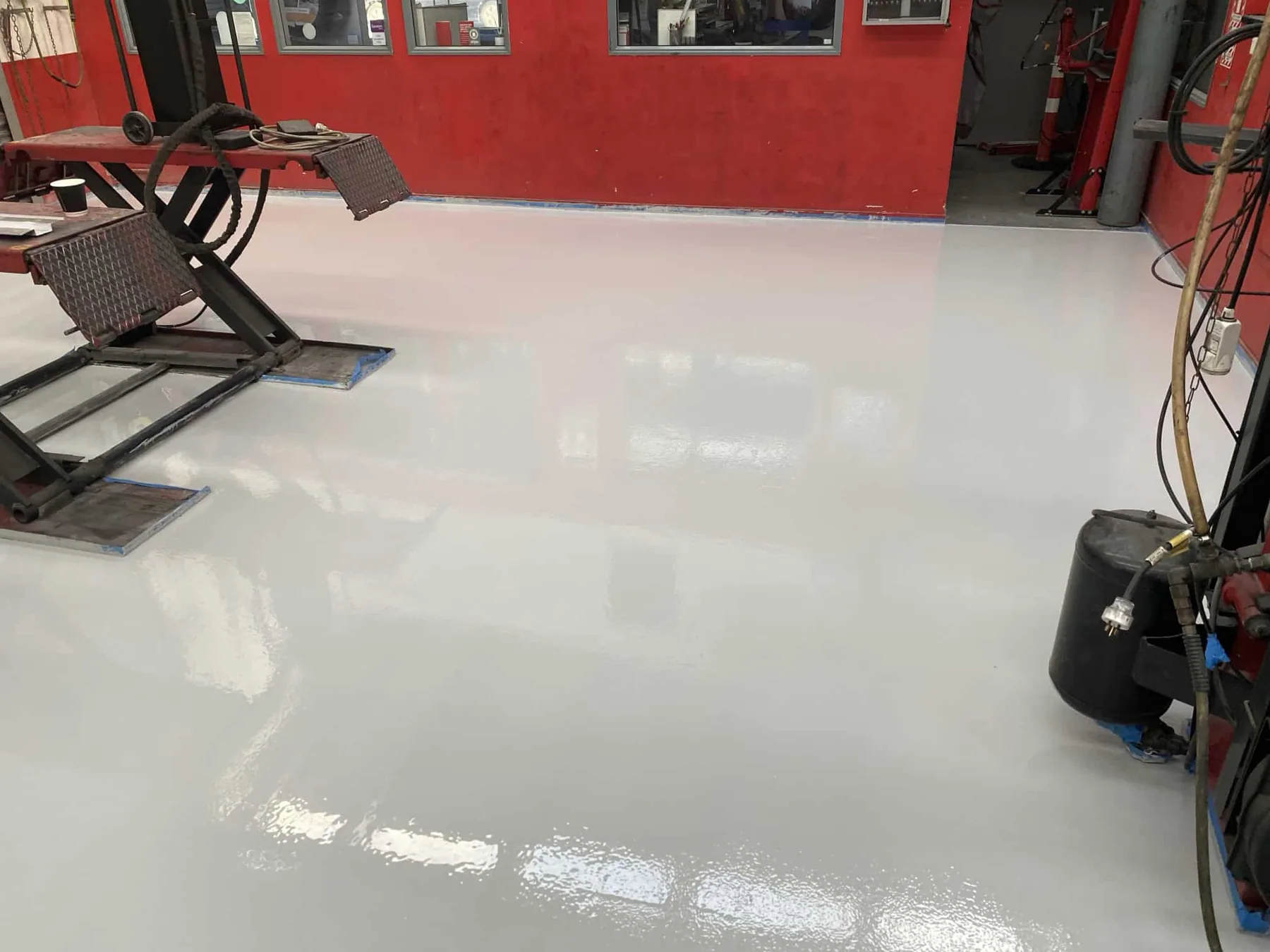
This Auckland automotive workshop demonstrates the clean, seamless finish shown in the original project imagery above. Each garage is quoted to its actual substrate and operating demands.
Questions answered
The right system depends on slab condition, contamination, moisture risk, sunlight and expected vehicle or workshop traffic. We assess these before recommending a coating.
Mechanical preparation removes weak surface material and contaminants and creates a suitable profile for the selected coating to bond.
Often, but the old coating must be assessed for adhesion and compatibility. Failed material may need to be removed before recoating.
Return-to-service time varies by coating, temperature and site conditions. Your quote and handover instructions confirm walking and vehicle timeframes.
Choose around real garage use
A garage coating is more than coloured paint. The complete system can include mechanical preparation, repairs, primer, epoxy or another resin body coat, decorative flake or texture, and a compatible topcoat. The right build depends on the slab and whether the space handles family vehicles, workshop tools, storage, sunlight, wet tyres, oils or chemicals.
A uniform finish can brighten a garage and make routine cleaning easier. Film build, sheen and UV exposure matter: standard epoxy may amber at an open sunlit doorway, so a compatible UV-stable finish may be recommended.
A flake broadcast adds visual texture and can disguise everyday dust and small marks. Flake size, blend, coverage and clear topcoat determine the appearance, texture and cleaning effort.
Selected aggregate can increase texture in wet-risk areas, but no floor is universally non-slip. More texture also retains more soil, so drainage, footwear and cleaning must be balanced.
Preparation before decoration
We inspect laitance, hardness, previous paint, tyre residue, oil, silicone, cracks, joints, repairs and signs of moisture. Diamond grinding removes weak or incompatible material and creates the surface profile required by the coating manufacturer. Edges and corners receive separate preparation rather than being painted over.
Deep oil can migrate back to the surface, excessive moisture can cause blistering, and active cracks may reflect through rigid resin. Static defects may be repaired, while designed movement joints usually remain functional and visible. A coating cannot make structurally moving or persistently damp concrete sound.
Primer, body coats, broadcasts and topcoats are installed within compatible recoat windows. Temperature, humidity and slab condition influence cure. The floor must stay clear of dust, water and traffic until the written milestones are reached.
Walking, replacing storage, wet cleaning and parking a vehicle may each have different timings. Hot tyres and chemicals should not contact a partly cured floor. We explain these stages at handover rather than promising a generic overnight turnaround.
Own the finish well
Sweep abrasive grit, wipe spills promptly and wash with a neutral cleaner approved for the topcoat. Avoid aggressive solvents, abrasive pads and steam unless the product instructions allow them. Use trays under leak-prone equipment, protect the surface during welding or dragging, and lift rather than slide heavy cabinets.
Gloss makes scratches and slab variation more visible; texture needs more detailed cleaning. Local damage may be repairable but a patch can remain visible. Periodic inspection and timely recoating can protect the underlying system before wear reaches bare concrete.
Area is only one factor. Existing coating removal, slab hardness, edge work, access, oil, moisture, cracks, joints, repairs, chosen resin build, flake coverage, slip texture, sunlight and required downtime all affect price. Photos help with an initial conversation, but uncertain contamination or moisture usually needs a site assessment.
The written scope identifies preparation, coating layers, finish, exclusions and return-to-service guidance so competing options can be compared on the complete system—not colour alone.
Send your approximate area, Auckland suburb, floor condition and photos.
Request a written quote
Share the site details and FlooringPro will follow up. Prefer to talk? Call 0800 452 102.
What happens next